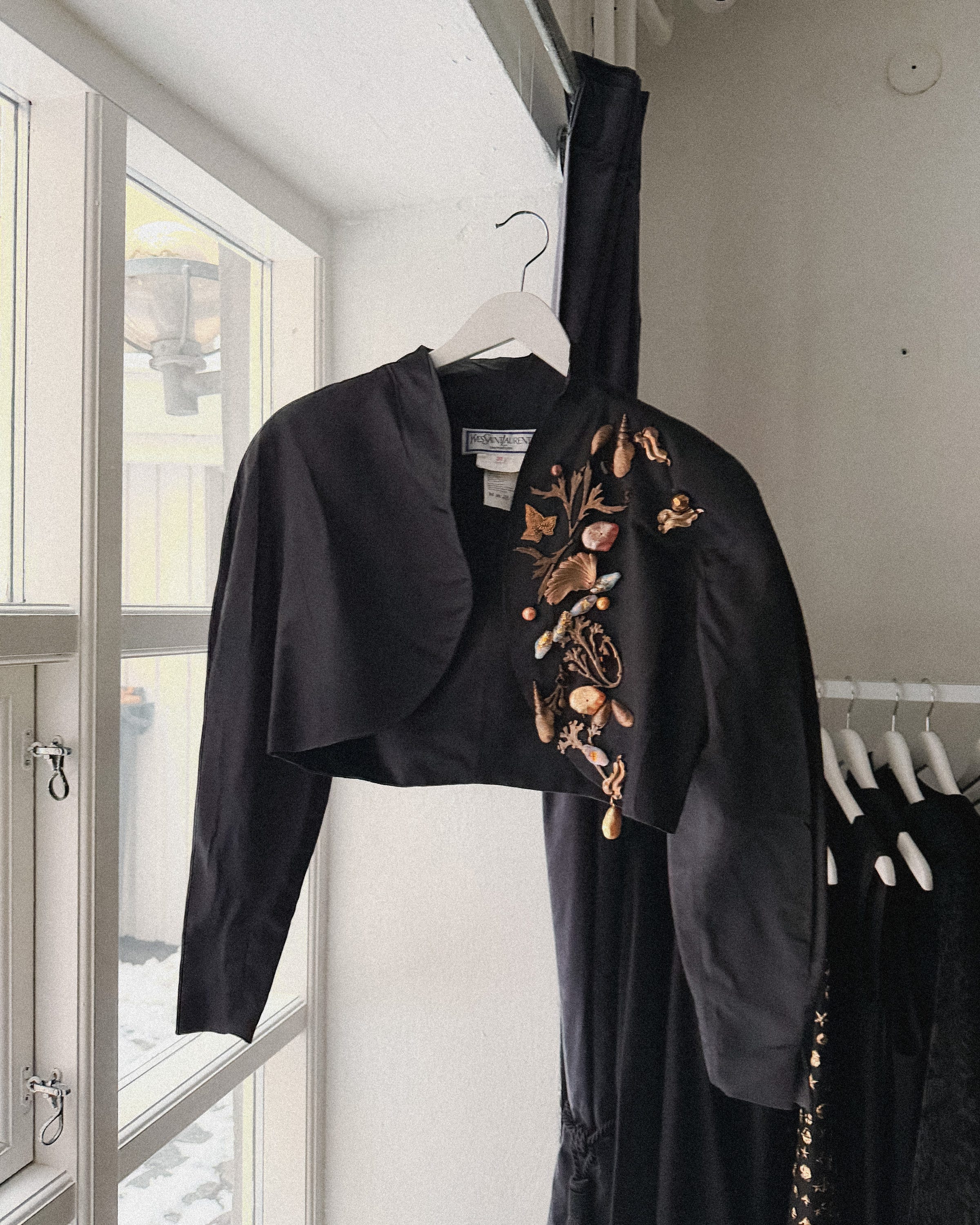
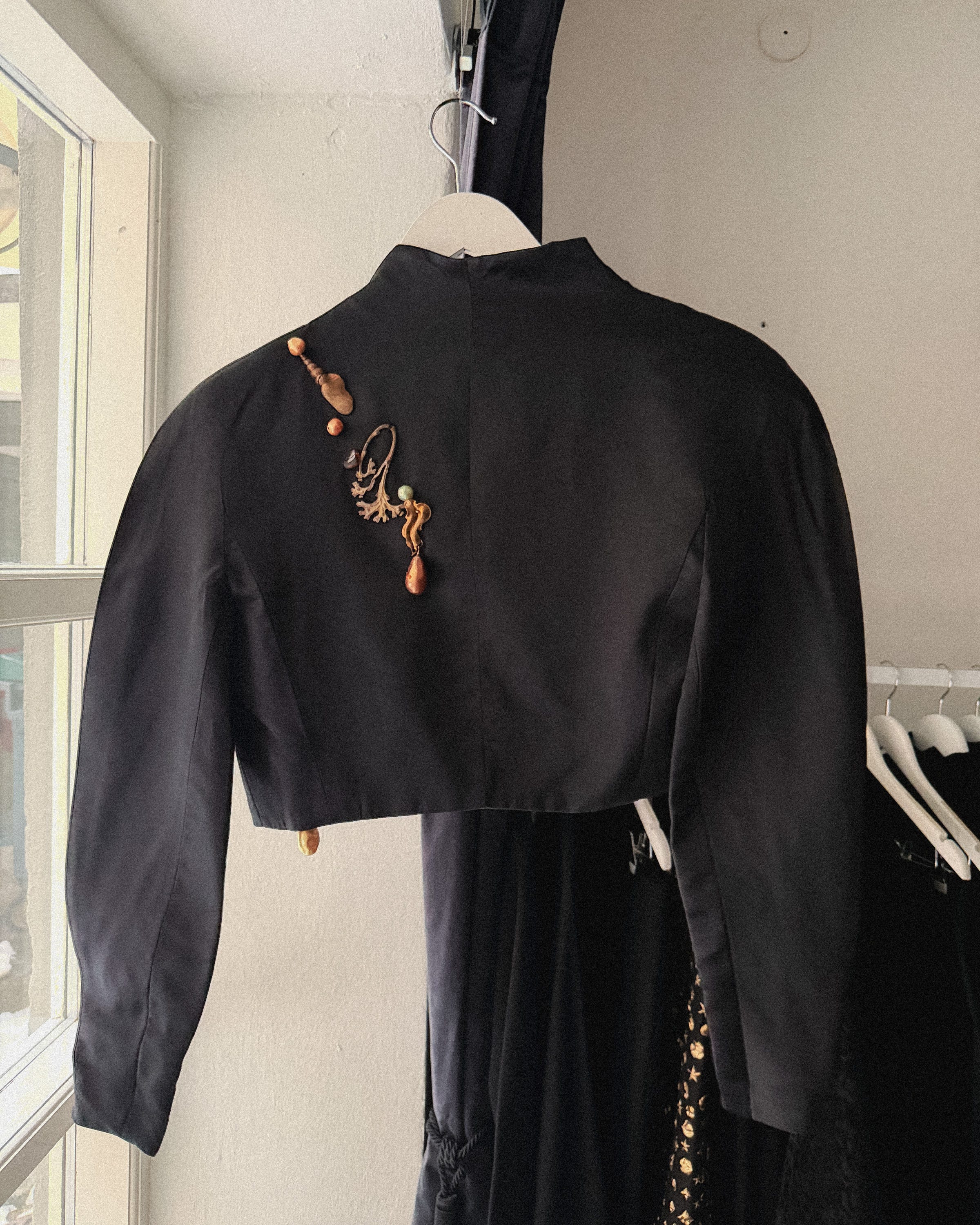
On Proportion
When proportion is right, nothing feels forced. A look at structure and balance in vintage garments.

Proportion is something you notice before you can name it. A garment feels right or it doesn’t — often before you understand why.
In the shop, it’s rarely the fabric alone that makes a piece work. It’s where something stops. Where it begins. How space is distributed across the body. Structure doesn’t announce itself; it settles things.
Balance used to be built into clothes. Jackets were cut to hold their own weight. Cropped lengths were intentional, not abrupt. Volume was placed carefully, not exaggerated. Proportion created calm.
Today, structure is often treated as restriction — something rigid, something formal. But in vintage garments, structure does the opposite. It gives softness a framework. It allows fabric to move without losing shape.
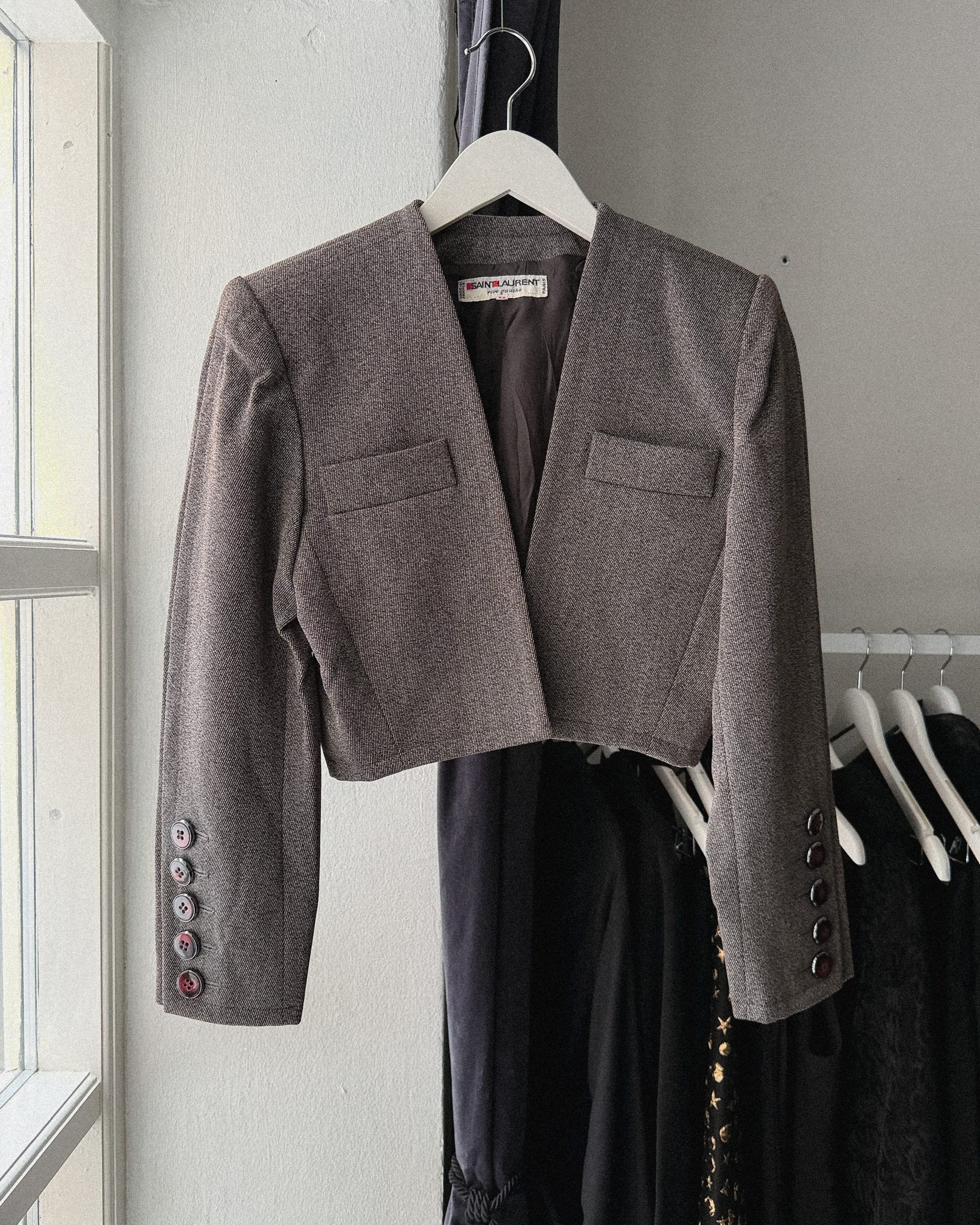
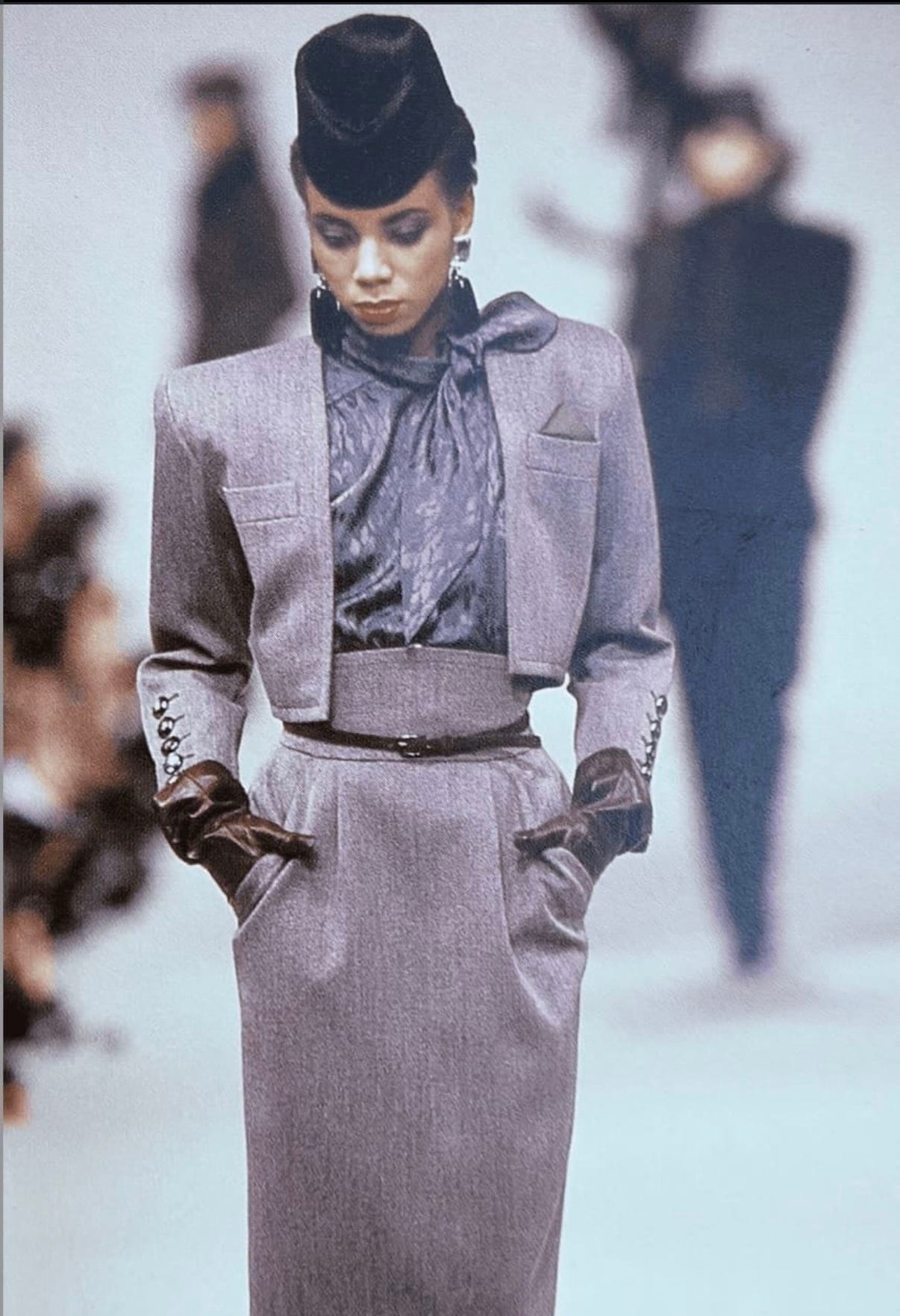
A cropped jacket changes posture immediately. The eye lifts. The body feels more upright. Nothing is tightened, but everything is held. Proportion does that work quietly.
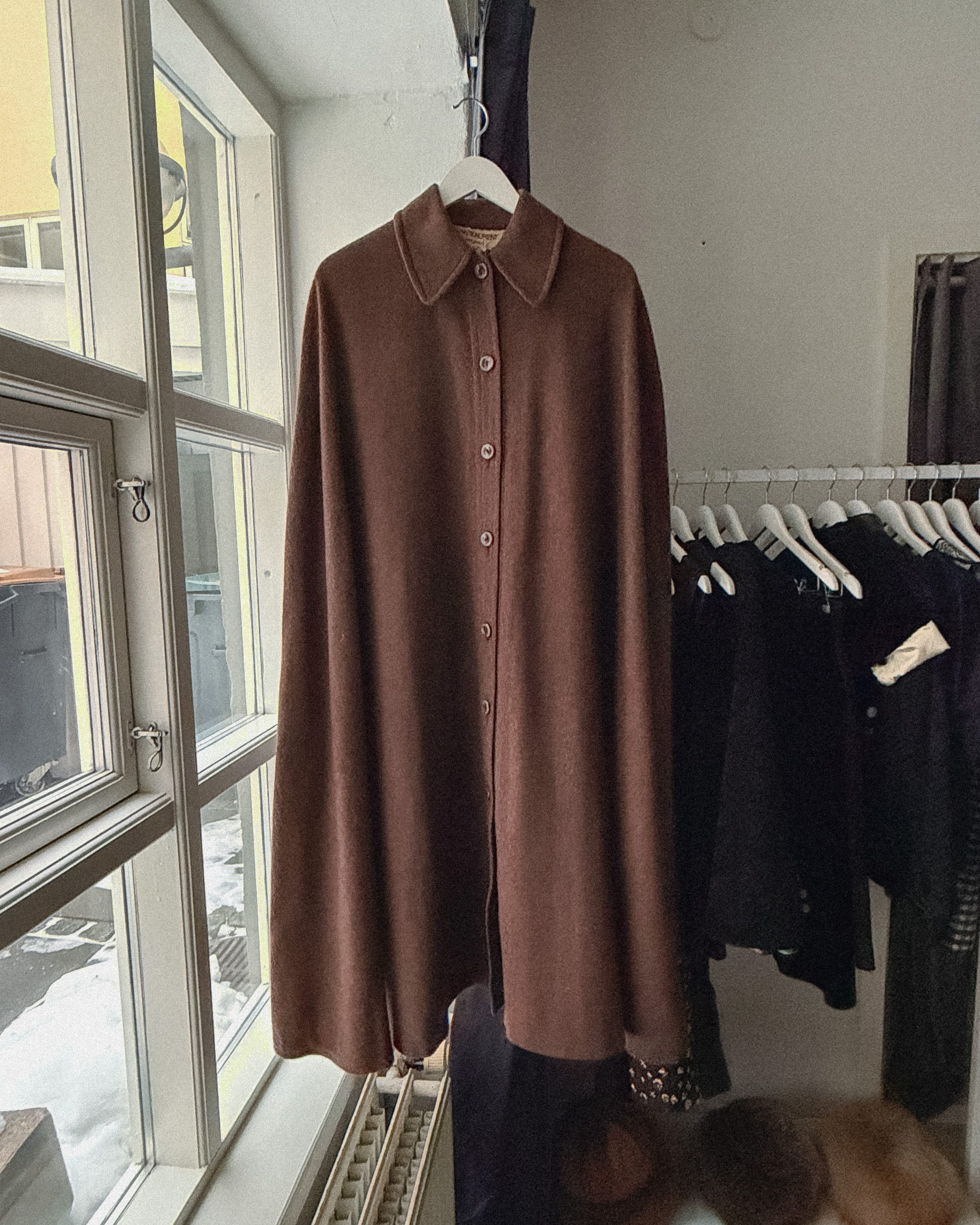
A cape distributes weight differently. There’s no single point of tension — the garment rests across the shoulders, allowing movement without collapse. Balance replaces control.
Even embellishment relies on proportion. When placed with restraint, it adds weight rather than decoration. It anchors a garment instead of distracting from it.
Structure isn’t about stiffness.
It’s about containment.
When proportion is right, nothing feels forced. The garment doesn’t compete with the body — it supports it. You stop adjusting. You stop checking. Things fall into place.
Balance is often invisible.
But once you feel it, you notice immediately when it’s missing.